Black is Beautiful: A Designer’s Real-World Embroidery Review
Let’s be honest—when I saw Black is Beautiful in my inbox labeled as a freebie, I paused. Not because I doubt the intent, but because “free” and “embroidery-ready” don’t always share the same runway. As someone who’s stitched hundreds of designs onto tote bags for local boutiques, baby onesies for Etsy shops, and custom sweatshirts for small creative teams, I test every new graphic like it’s going into production tomorrow. So I pulled out my hoop, grabbed some medium-weight cotton twill and tear-away stabilizer, and ran Black is Beautiful through its paces—not as a file, but as a finished product.
First Impression: Bold, Balanced, and Quietly Confident
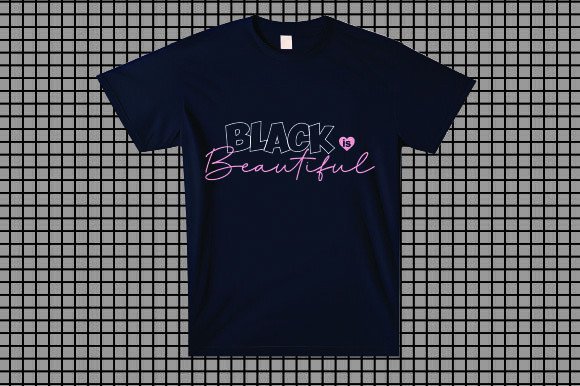
At 4500×5400 pixels at 300 dpi, the transparent PNG delivers crisp edges and clean negative space—no jagged halos or fuzzy anti-aliasing. The JPG holds up well for quick mockups; the AI and SVG files give real flexibility if you’re adapting size, spacing, or layer order before digitizing. Visually, Black is Beautiful isn’t loud—it’s grounded. It uses strong, intentional negative space, balanced weight distribution, and a rhythm that feels both modern and timeless. That matters when you’re stitching on curved surfaces like caps or soft baby blankets where visual distortion can mute impact.
Where It Shines: Tote Bags, Sweatshirts, and Thoughtful Gifting
I stitched Black is Beautiful onto a natural canvas tote (medium-weight, tightly woven) using black thread on cream fabric—and it landed perfectly. The design breathes. No dense fill-stitch clusters that would stiffen the fabric or cause puckering. No tiny satin-stitch details that vanish under 12 stitches per inch. It’s generous in scale but precise in execution—ideal for custom apparel, embroidered patches, and kitchen towels where legibility matters after repeated washing.
For small business owners: this works beautifully as a boutique-branded item. I used it on a linen apron for a local ceramicist’s shop—subtle enough to feel intentional, bold enough to hold attention. As a holiday embroidery piece? Yes—especially on tea towels or pillow covers where simplicity reads as care. For Etsy sellers offering personalized gifts, Black is Beautiful pairs cleanly with monograms or minimalist names without competing. It doesn’t shout “trendy”—it says “made with intention.”
Where to Pause: Texture, Scale, and Fabric Behavior
This isn’t a one-size-fits-all embroidery file—and that’s okay. On highly textured fabrics (like bouclé or thick terry cloth), fine interior lines may soften or disappear. On stretchy knits—think baby onesies or lightweight sweatshirts—you’ll need cut-away stabilizer and possibly slight digitizing tweaks to prevent distortion. And while the design scales well, avoid shrinking it below 3.5 inches wide for machine embroidery: corners tighten, curves lose flow, and stitch density becomes uneven.
Dark fabric? It still reads clearly—but test contrast with your thread. Black-on-black can feel elegant, but only if your satin stitch has enough sheen and tension to catch light. Light fabric gives more flexibility, especially if you plan to use variegated or metallic threads for subtle accents.
Practical Notes Every Embroiderer Should Check Before Stitching
- Test first on scrap fabric—especially if using textured, stretchy, or loosely woven material.
- Review stitch density in your embroidery software. If you’re converting from the SVG or AI file, watch for overfilled areas that could cause stiffness or thread breakage.
- Confirm hoop size compatibility. While the original file doesn’t list dimensions, the 4500×5400 resolution suggests it’s built for larger hoops—likely 5×7" or bigger. Don’t force it into a 4×4" without checking proportions.
- Inspect small details at 200% zoom—look for hairline gaps, overlapping paths, or ungrouped elements that might misalign during stitching.
- Try black-and-white mockups before finalizing thread choices. Does the shape hold up without color crutches?
- Compare light vs. dark backgrounds using the transparent PNG. Does the silhouette retain clarity? Does spacing feel generous or cramped?
- Use proper stabilizer—tear-away for stable wovens, cut-away for knits, and water-soluble for delicate layers like lace overlays.
- Verify licensing before selling finished products or reselling digital files. Since it’s listed as a freebie in the Graphics category, confirm whether commercial use is permitted—don’t assume.
What It Adds to Your Craft Business—Beyond the Stitch
Black is Beautiful elevates perception. When customers see this on a handmade pillow cover or boutique sweatshirt, they don’t just register a phrase—they register confidence, cohesion, and care. That builds trust. It also supports brand consistency: pair it with neutral palettes, clean typography, and tactile packaging, and it becomes part of a quiet, confident identity—not a standalone slogan.
For Etsy sellers, it’s a low-risk, high-return asset. You can feature it in printable mockups (the high-res PNG makes that easy), bundle it with coordinating patterns, or use it as a signature accent across multiple product lines—towels, totes, baby blankets—without visual fatigue. And for craft fair vendors? It translates instantly into conversation: people recognize the phrase, feel its weight, and connect it to quality craftsmanship—not mass production.
Final Thought: A Design That Earns Its Place
Black is Beautiful isn’t flashy. It doesn’t rely on gradients, drop shadows, or trendy fonts. It earns its place by being legible, adaptable, and emotionally resonant—even stitched simply in matte black thread on natural linen. It works for baby embroidery, holiday embroidery, commercial embroidery, and personal keepsakes alike—not because it’s generic, but because it’s thoughtfully composed.
If you’re evaluating this as a digital embroidery file for real-world use, ask yourself: does it support the story your product tells? Does it stitch cleanly without excessive tweaking? Does it feel like something your customer would proudly display—not just wear, but keep? For me, Black is Beautiful passes all three. Just remember: even the best embroidery file needs your judgment, your fabric knowledge, and your hand behind it. Test it. Trust your eye. Then make something meaningful.