Retro 1776 USA SVG
Let’s be real: I opened the Retro 1776 USA SVG zip file while prepping for a client’s Fourth of July boutique line—hand-embroidered canvas totes, vintage-inspired sweatshirts, and baby onesies with subtle patriotic flair. Not flag-waving loud, but quietly confident. That’s exactly what this design delivers at first glance: clean, mid-century graphic energy with just enough historical weight to feel meaningful—not kitschy.
A Design That Breathes on Fabric
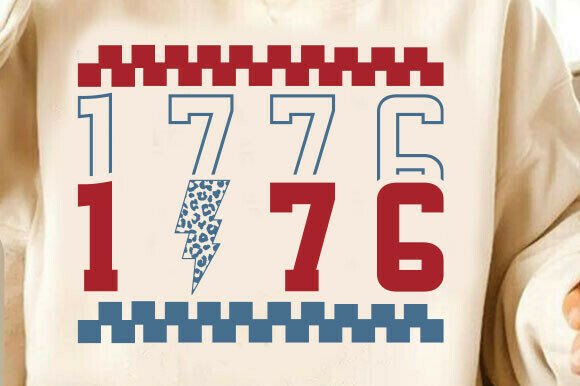
The Retro 1776 USA SVG isn’t fussy. It leans into bold outlines, balanced negative space, and a centered composition that reads instantly—even at 3 inches tall on a curved tote handle or a pocket-sized apron patch. The typography feels hand-drawn but precise: chunky serifs, slightly uneven baseline, and that warm, analog imperfection you’d expect from a 1970s screen print. No tiny serifs to vanish in fill stitch. No overlapping letters that’ll blur under satin stitch. Just solid, scalable shape.
I tested it as a machine embroidery design on medium-weight cotton twill (for a custom apron) and lightweight jersey (for a toddler tee). On the twill, it stitched cleanly with minimal puckering—especially after switching to a medium-cutaway stabilizer. On the jersey? A light tear-away + basting spray saved me from distortion. The design’s open layout means fewer dense fill areas, so it handles stretch and drape better than tighter, busier graphics.
Where It Shines—and Where It Asks for Care
This isn’t a one-size-fits-all embroidery file. It excels where clarity and character matter most:
- Tote bag design: Centered on natural canvas, it reads like a curated vintage find—not a clipart add-on.
- Sweatshirt embroidery: Works beautifully above the left chest or across the back yoke, especially in muted navy or heather gray.
- Baby embroidery: On a soft organic cotton onesie, it reads sweetly nostalgic—not overwhelming. Think “grandpa’s old band tee” energy, not parade float.
- Embroidered patch: Clean edges hold up well when heat-applied or sewn on denim jackets or backpacks.
- Holiday embroidery: For Independence Day markets or small shop merchandise, it adds heritage without cliché.
But here’s where attention matters:
- Small hoop sizes: Below 4 inches wide, some letter spacing tightens visually—test stitch-out before committing to a 2.5" cap front.
- Textured fabrics: Linen or bouclé can soften edges; consider slightly heavier thread weight or a split satin stitch for definition.
- Dark fabric: The design’s strong silhouette helps, but avoid ultra-thin white thread on black—go for matte cotton or tonal ecru for depth.
- Curved surfaces: Caps and hats need careful hooping and possibly reduced density—check how the “1776” curves across the front panel before finalizing.
- Frequent washing: This works best on stable, low-shrink items. Avoid placing it on thin baby blankets or tea towels meant for heavy laundering unless you reinforce backing.
More Than a Graphic—It’s a Brand Signal
As a designer who’s helped Etsy sellers scale handmade product lines, I notice how much Retro 1776 USA SVG does for perceived value. It doesn’t scream “sale”—it invites pause. Customers linger on it. They imagine gifting it. They trust it because it feels intentional, not algorithm-generated. That matters whether you’re listing a $38 embroidered pillow cover or bundling it into a holiday gift set.
For craft business owners, this design supports brand consistency without locking you in. Pair it with neutral tones, raw-edge hems, or recycled cotton—no forced Americana. Use it as a subtle logo alternative on packaging tags or woven labels. Or go minimalist: stitch just the “1776” in monochrome on a linen kitchen towel. It flexes.
Practical Designer Notes Before You Stitch
You’ll want to do these five things before cutting thread or uploading to your embroidery machine:
- Test on scrap fabric first—especially if using textured, dark, or stretchy material. Watch how corners settle and how letter spacing holds.
- Check thread color contrast in both natural and artificial light. What reads crisp at noon may fade under café lighting.
- Review stitch density in your digitizing software—if converting from the SVG. Avoid overloading small areas like the crossbar of the “7.”
- Confirm hoop size compatibility. The vector files give flexibility, but your machine’s max hoop limits what you can stitch in one pass.
- Verify licensing. Since this is sold as a digital embroidery file, confirm whether commercial use (e.g., selling finished embroidered totes on Etsy) is permitted—some sellers restrict resale of physical items made from their designs.
Also: try a black-and-white printable mockup first. Does the shape still carry weight without color? Does it hold its own next to other design assets in your collection? I did—and it passed. That’s rare.
Final Thought: A Quiet Workhorse
The Retro 1776 USA SVG won’t win awards for complexity—but it earns respect for restraint. It’s the kind of T-Shirt Designs graphic that makes customers say, “Where’d you get that?” not “What is that?” It fits seamlessly into handmade product lines, holiday embroidery collections, and small shop branding—without demanding attention, just deserving it. If you’re curating design assets for custom apparel or building a cohesive craft business, this isn’t filler. It’s foundation.
Use it thoughtfully. Test it honestly. Let it live where authenticity matters most—on things people keep, wear, and pass down.