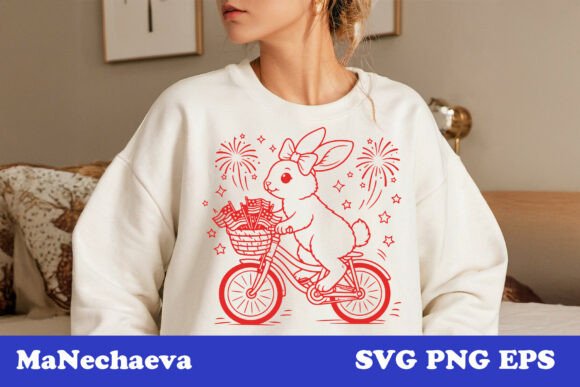
Fourth of July SVG PNG
A Designer’s First Look: Bold, Festive—But Is It Embroidery-Ready?
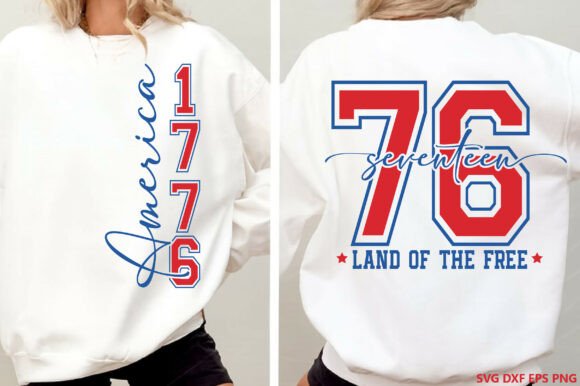
When I opened the Fourth of July SVG PNG, my eye went straight to the layout: stars, stripes, and a clean “USA” or “Fireworks” motif (exact variation depends on the version)—not overly complex, but unmistakably patriotic. As someone who’s stitched hundreds of holiday designs for boutique clients and Etsy sellers, I immediately asked: *Will this hold up under needle and thread—or does it live only in the digital realm?*
This Isn’t Just a T-Shirt Design—It’s a Product Decision
I tested the Fourth of July SVG PNG on a custom embroidered tote bag for a local farmers’ market vendor. She wanted something cheerful, scalable, and quick to stitch—no tiny details that’d snag or blur on canvas. The design delivered: strong outlines, open negative space, and balanced proportions. That matters. A machine embroidery design with too much fill stitch or cramped lettering won’t translate cleanly onto textured fabric like burlap or heavy cotton duck. This one breathes—and that’s rare in holiday graphics.
Where It Shines (and Where It Needs Caution)
The Fourth of July SVG PNG works best when treated as a versatile embroidery file—not just a cutting file. Here’s where it earned my trust:
- Custom apparel: Clean lines mean crisp satin stitch edges on sweatshirts and crewnecks—even at 3.5" wide.
- Baby embroidery: Simplified motifs (like a single starburst or minimal flag) avoid overwhelming tiny onesies; no fine linework that could irritate sensitive skin.
- Embroidered patch: Its bold silhouette holds shape well when heat-applied or sewn onto denim jackets or backpacks.
- Holiday gift & boutique product: Customers recognize it instantly—but it doesn’t feel mass-produced, thanks to intentional spacing and uncluttered rhythm.
But here’s where I slowed down:
- Small hoop sizes: If your version includes script text smaller than 1/4", skip it for 4x4 hoops—running stitch will wander. Stick to center-aligned block fonts or remove text entirely for tight spaces.
- Stretchy fabric: Not ideal for t-shirts without proper cutaway stabilizer. The design’s structure relies on stability—don’t wing it on jersey knits.
- Dark fabric: Check contrast early. Some versions use thin outlines that vanish on navy or charcoal unless you boost thread density or switch to metallic or high-sheen rayon.
- Curved surfaces (caps, hats): Avoid versions with horizontal banners or long wordmarks—they’ll distort. Opt for circular or arched layouts if available.
What Your Customers Actually Notice
Let’s be real: buyers don’t care about vector paths. They notice whether the stars look *sharp*, not pixelated; whether the red threads pop against white cotton; whether the finished product feels handmade—not rushed. The Fourth of July SVG PNG lands well because it avoids visual noise. No overlapping gradients, no micro-details lost in stitching. That builds customer trust: when a personalized gift arrives and looks exactly like the mockup, repeat orders follow.
For Etsy sellers and small shop owners, that consistency is gold. It means fewer returns, better reviews (“stitched beautifully!”), and smoother listings—especially when paired with clean printable mockups showing the design on tea towels, aprons, or pillow covers. It also scales quietly into brand work: imagine it stitched subtly on the hem of a chef’s apron or the corner of a nursery blanket. It reads as thoughtful—not generic.
Practical Embroidery Designer Notes You Can’t Skip
Before stitching your first Fourth of July SVG PNG project, do this—no exceptions:
- Test on scrap fabric first, using your exact stabilizer + thread combo. Watch how fill stitch settles on your target fabric (e.g., lightweight linen vs. fleece).
- Review stitch density. If the file feels dense in star clusters or stripe bands, reduce density by 5–10%—especially for baby items or garments meant for frequent washing.
- Confirm hoop size compatibility. If you’re using a 5x7 hoop but the design maxes out at 4.8", leave breathing room—don’t stretch or scale manually.
- Inspect small details in your embroidery software: are star points sharp? Do letters have clean entry/exit points? If not, simplify or redraw key anchors.
- Test black-and-white mockups. Does the design retain impact without color? If it flattens visually, consider adding subtle shadow stitches or outline reinforcement.
- Compare light/dark backgrounds. Try stitching the same file on off-white and navy twill—you’ll spot contrast gaps fast.
- Use proper stabilizer: tear-away for stable wovens, cutaway for knits, and mesh for caps. Skipping this turns even the best Fourth of July SVG PNG into puckered disappointment.
- Verify licensing. Since this is marketed as an instant download for cutting machines, confirm whether commercial embroidery use (e.g., selling finished embroidered sweatshirts) is explicitly allowed. When in doubt, contact the seller—don’t assume.
Final Thought: A Reliable Workhorse, Not a Showstopper
The Fourth of July SVG PNG isn’t trying to win design awards. It’s built for real work: stitching reliably across dozens of fabric types, scaling cleanly from baby onesies to oversized tote bags, and holding attention without shouting. For craft business owners juggling holiday deadlines, it’s the kind of graphics asset that ships on time, photographs well, and earns quiet praise—not confusion or corrections.
If you’re choosing between ten “fireworks” designs for your next batch of embroidered kitchen towels or personalized 4th gifts, pick the one that respects the needle, the fabric, and the person wearing it. This one does.